
Office tour
Have a look around before you come in
This page is meant to be looked at together. Going through it with your child beforehand takes most of the unknown out of a first visit, and the unknown is usually the frightening part.
Book Now
Stay close, feel reassuredParents are welcome alongside their child during in-office visits at both clinics
We show, explain, then beginWe introduce the tools and explain each step in child-friendly language, to build confidence
Come explore, at their paceA relaxed visit to meet our team and discover the space, with no treatment planned
The whole appointment
Your visit, door to prize tower
A first dental visit at Children’s Dental Health Centre takes about forty-five minutes for most children, and closer to twenty for a baby or toddler. It follows the same order every time: check in, play, walk back with your parent, try the chair, count the teeth, clean and polish, fluoride, and choose a prize. Parents stay in the room throughout, and nothing is done to a child before it has been shown and explained.
-
 1
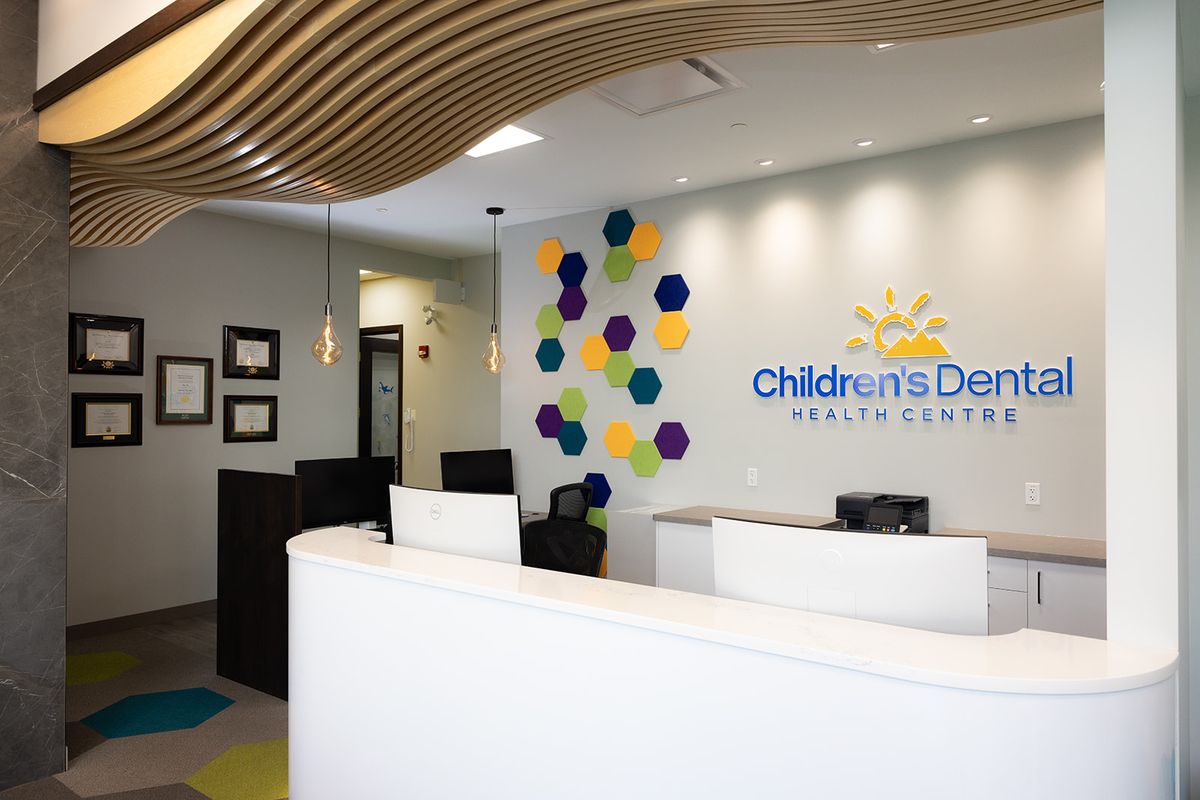
Coming through the front door
“The first thing you will see is the front desk, and someone there will say hello to you by name.”
We check you in, and then the waiting happens in the play area. There is an arcade machine and bubble hockey, and they are not decoration, they get used.
-
 2
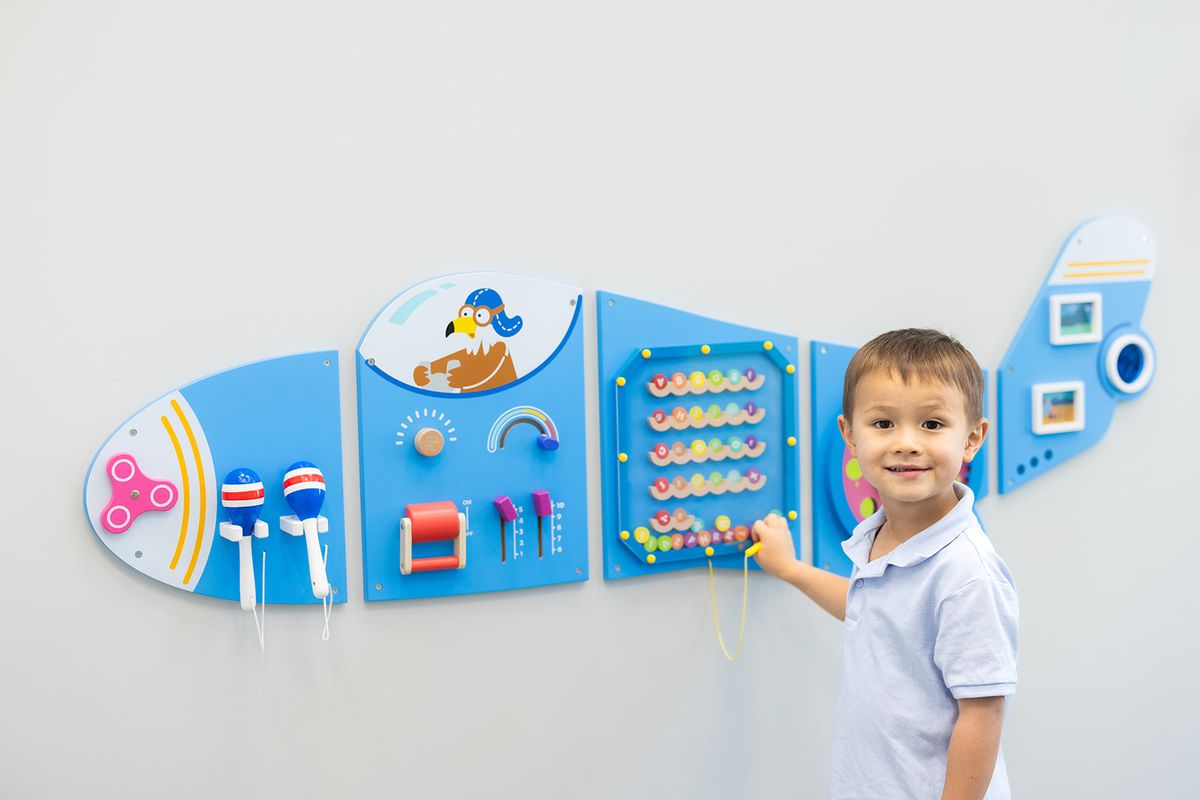
The waiting room
“You can play until it is your turn. Nobody will rush you through this part.”
Arcade and bubble hockey, and quieter corners away from them for children who find that much noise difficult. If your child needs the quiet version of this room, tell us when you book and we will time the appointment for it.
-
 3
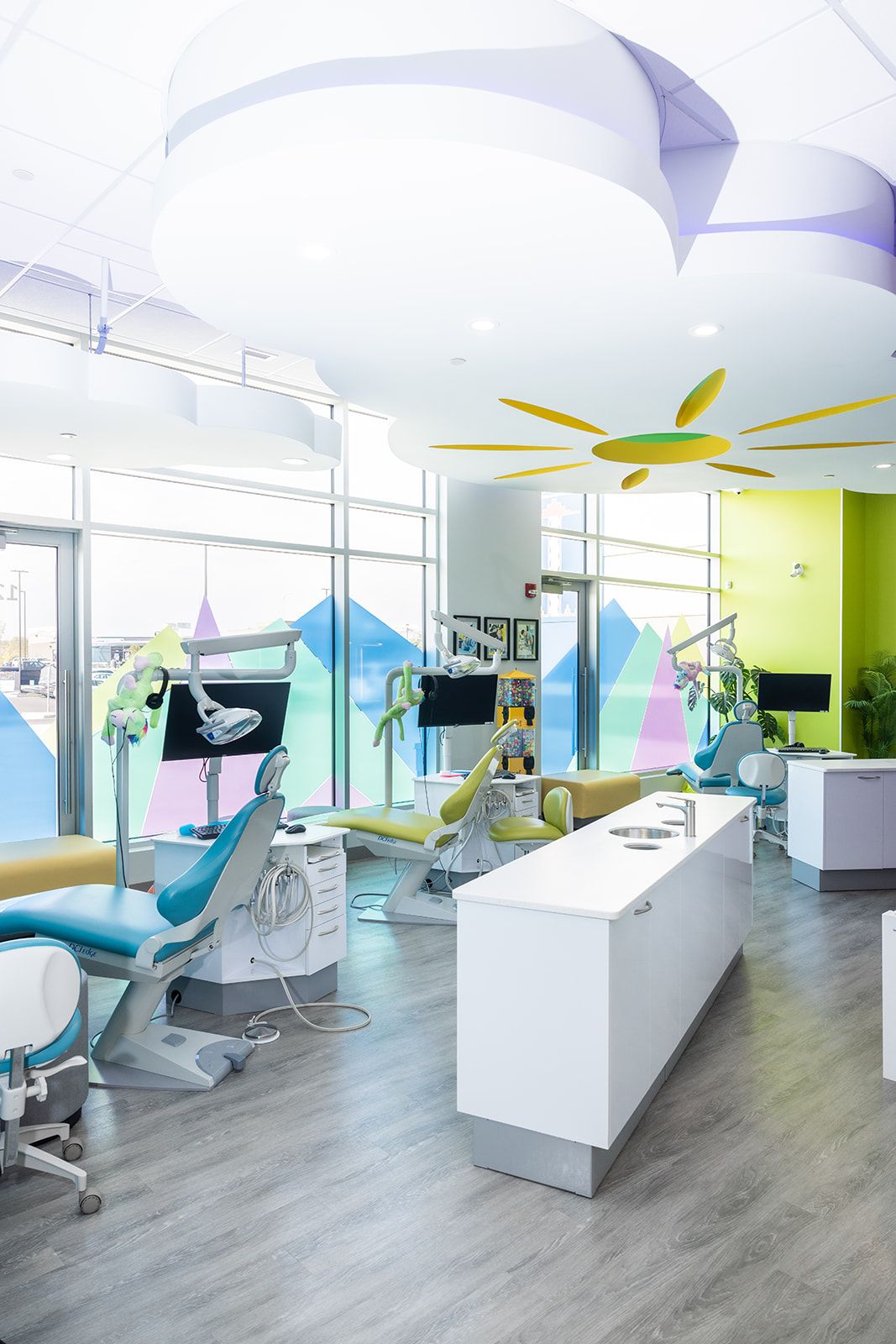
Walking back to the room
“Someone will come and get you, and your grown-up comes too. They stay with you the whole time.”
Parents are welcome in the room, always, at both clinics. We will never ask you to wait outside while something happens to your child.
-
 4
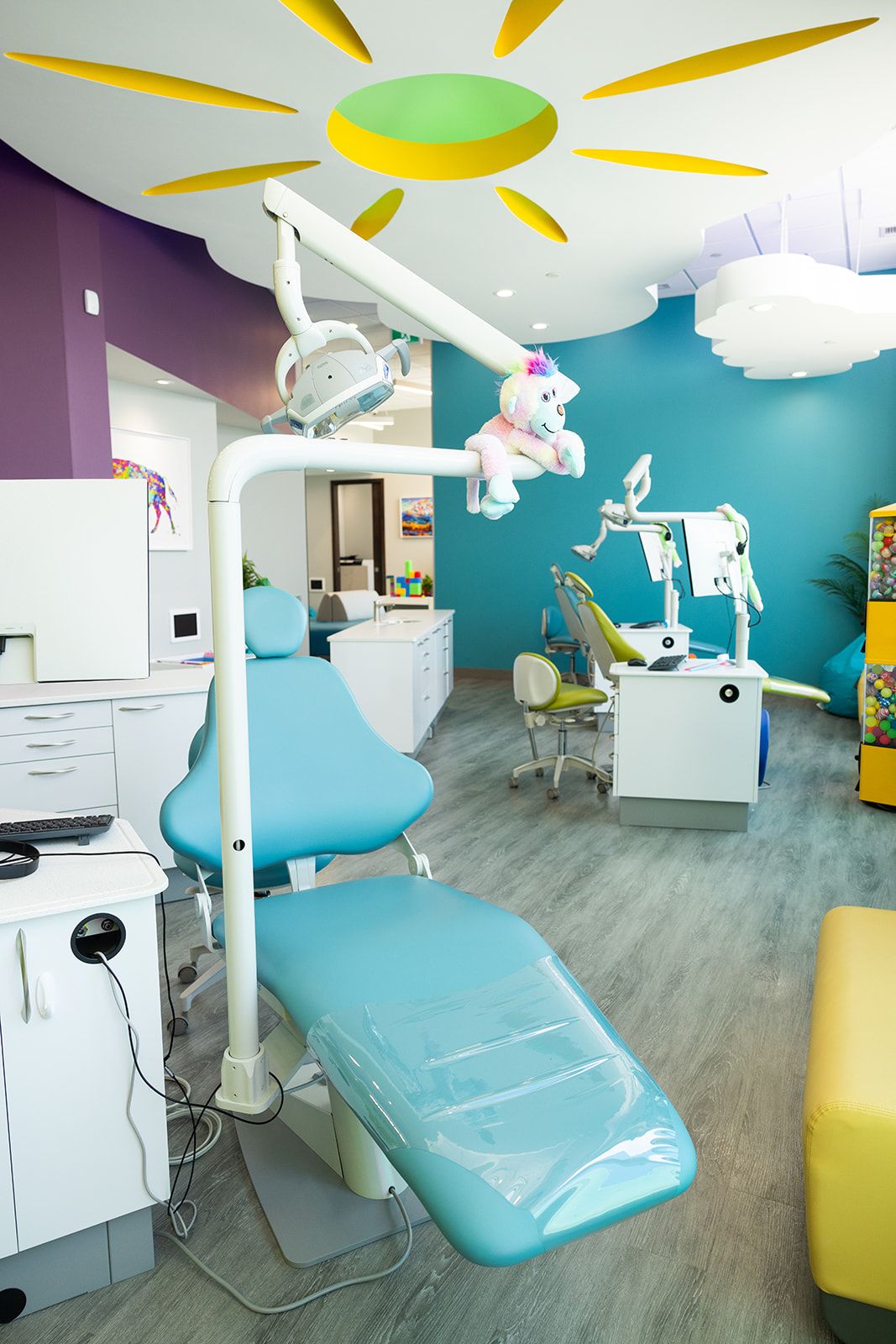
The chair
“The chair goes up and down and leans back, a bit like a ride. You get to try it before anything else happens.”
The first thing most children do is go up and down in the chair. It sounds trivial and it is one of the most useful two minutes of the appointment, because it turns the strangest object in the room into something they have already used.
-
 5
Counting your teeth
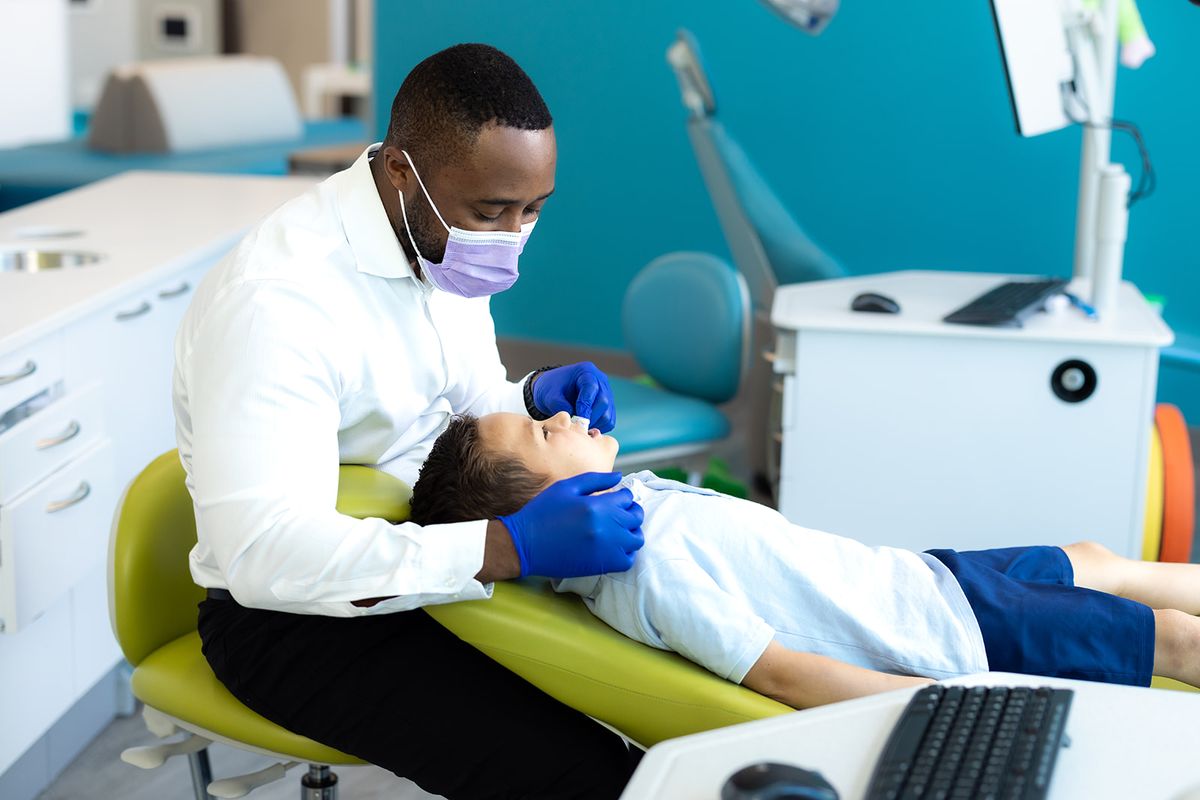
“We use a tiny mirror to count your teeth. We will show you everything first, and tell you before we do it.”
Tell-show-do: we name the instrument, let your child hold or touch it, and only then use it. Nothing is introduced to a child’s mouth that they have not already seen.
-
 6
Pictures of your teeth
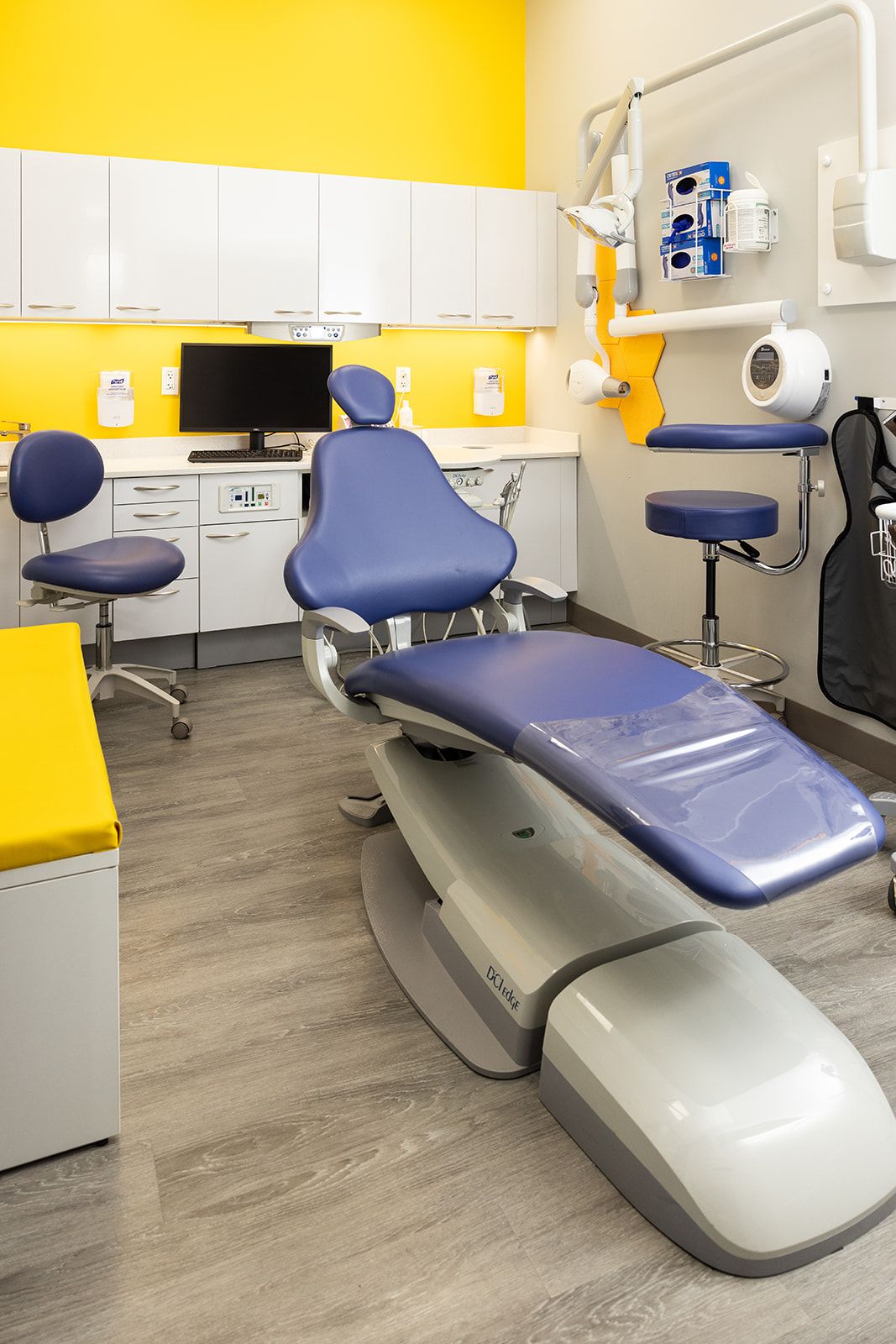
“Sometimes we take a picture of the inside of your teeth. It does not hurt and it is over in a second.”
Only when there is a clinical reason, using digital sensors at the lowest practical dose, with shielding. We explain what we are looking for before we take any.
-
 7
The polish and the paint
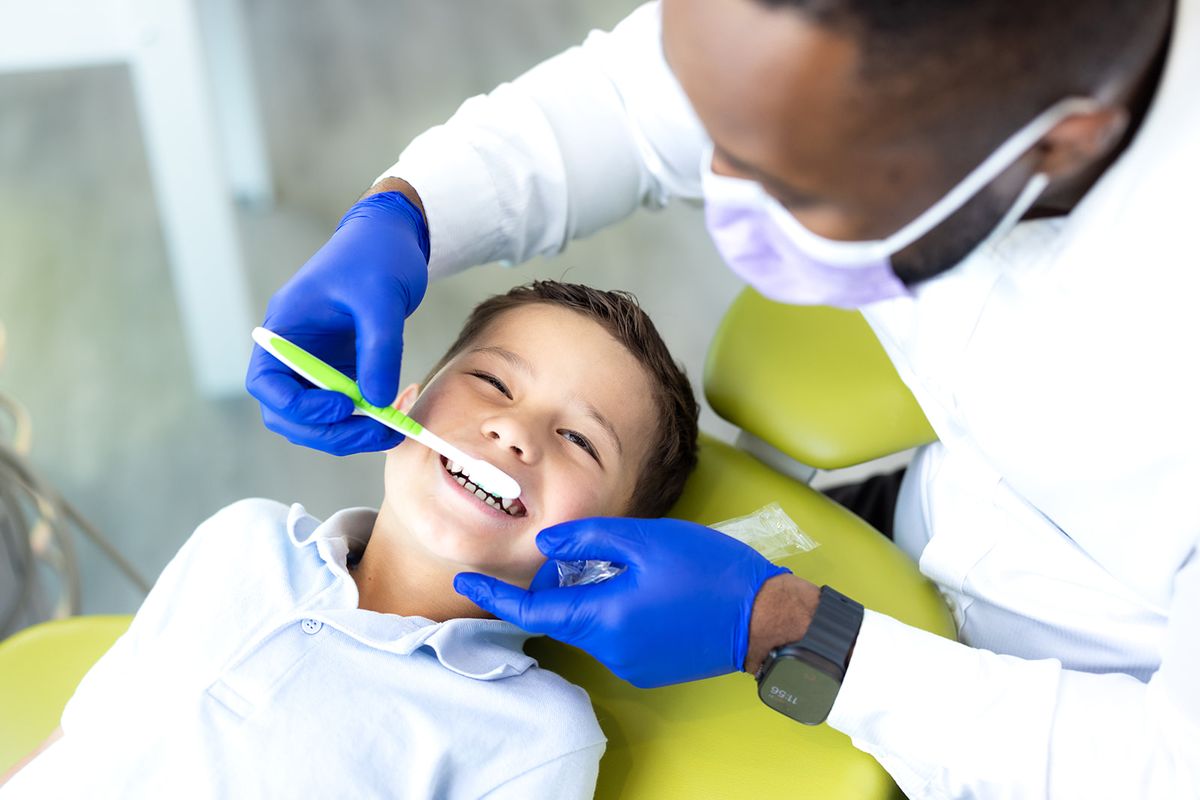
“The polisher tickles and buzzes. You can pick the flavour. Then we paint something on your teeth that helps keep them strong.”
Cleaning, polishing and fluoride varnish. The flavour choice matters more than it sounds, because it is the one part of the appointment the child controls.
-
 8
The end bit
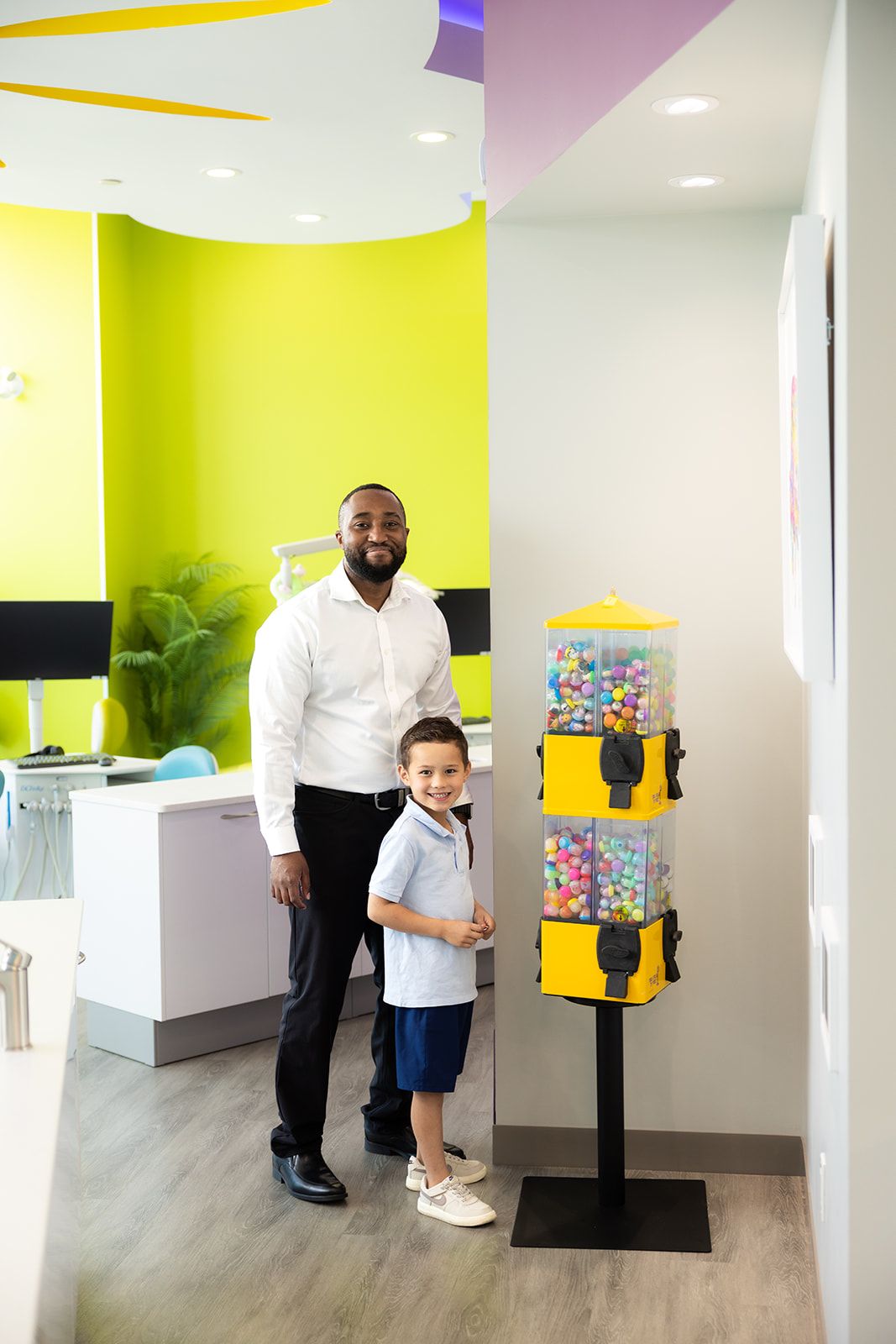
“When you are finished you get to choose something from the prize tower.”
And you get the findings, the plan if there is one, and the chance to ask everything you thought of in the car on the way here.


See the clinic
Both clinics, and the surgical centre
The rooms, the chairs, the sinks and the people your child will meet. Every photograph here was taken at our own clinics.


If that is not enough
What is in the room if your child needs more
None of this has to be asked for twice, and none of it is treated as a special request.
Noise-cancelling headphones
For children who find the sounds harder than anything else in the room.
Weighted blankets
Available on request. For a lot of sensory-sensitive children this is what makes the chair possible.
Quiet appointment times
Booked on purpose, at the ends of the day, when the clinic is at its calmest.
Visits where nothing happens
A desensitisation visit is a real appointment where we do no clinical work at all. Some children need one. Some need four.
For children with sensory differences, autism or medical complexity, there is more we can do than fits on this page. How we approach special needs dentistry.
Come and look around before you book
Children who have already seen the room walk into it differently. Call and we will arrange a time with nothing clinical in it.
Questions
About coming in
Can we visit before the first appointment?
Yes, and for an anxious child it is often the single best thing you can do. Call us and we will arrange a time to come in, look around, sit in the chair and leave without anything happening. It is a real appointment, we plan for it, and there is no expectation that your child does anything at all.
Will I be allowed in the room with my child?
Yes, always, at both clinics. We will never ask you to wait outside while something is done to your child. The only exception is the operating room at our surgical centre, where one parent comes in with the child until they are asleep and then rejoins them in recovery.
My child cannot cope with the waiting room. What can you do?
Tell us when you book. We can give you a quieter time of day, bring you straight through without waiting, or arrange for you to wait in the car and be called in when the room is ready. None of this is unusual and none of it is a favour.
Is there parking, and is it accessible?
Free surface parking directly outside both clinics, with step-free access from the lot. The North clinic in Sage Hill has both an elevator and stairs in the building. Strollers and wheelchairs get in without a detour at either location.
What if my child refuses to get in the chair?
Then they do not get in the chair, not that day. That is a normal outcome for a first visit and not a failure. We can count teeth with a child on your lap, standing up, or sitting on the floor if that is where they are. What we will not do is hold a child down to get through an examination.
Do both locations look the same?
They are set up the same way and offer the same care, though the buildings are different. The photographs on this page are from both. If seeing the specific room your child is coming to would help, tell us which clinic you are booked into and we can talk you through it on the phone.